Why Skills-Based Hiring Is Replacing Traditional Recruitment
Published on Jul 24, 2026
Skills are becoming the new currency of hiring. See why leading employers are redefining recruitment for the future of work.
What Is Skills-Based Hiring?
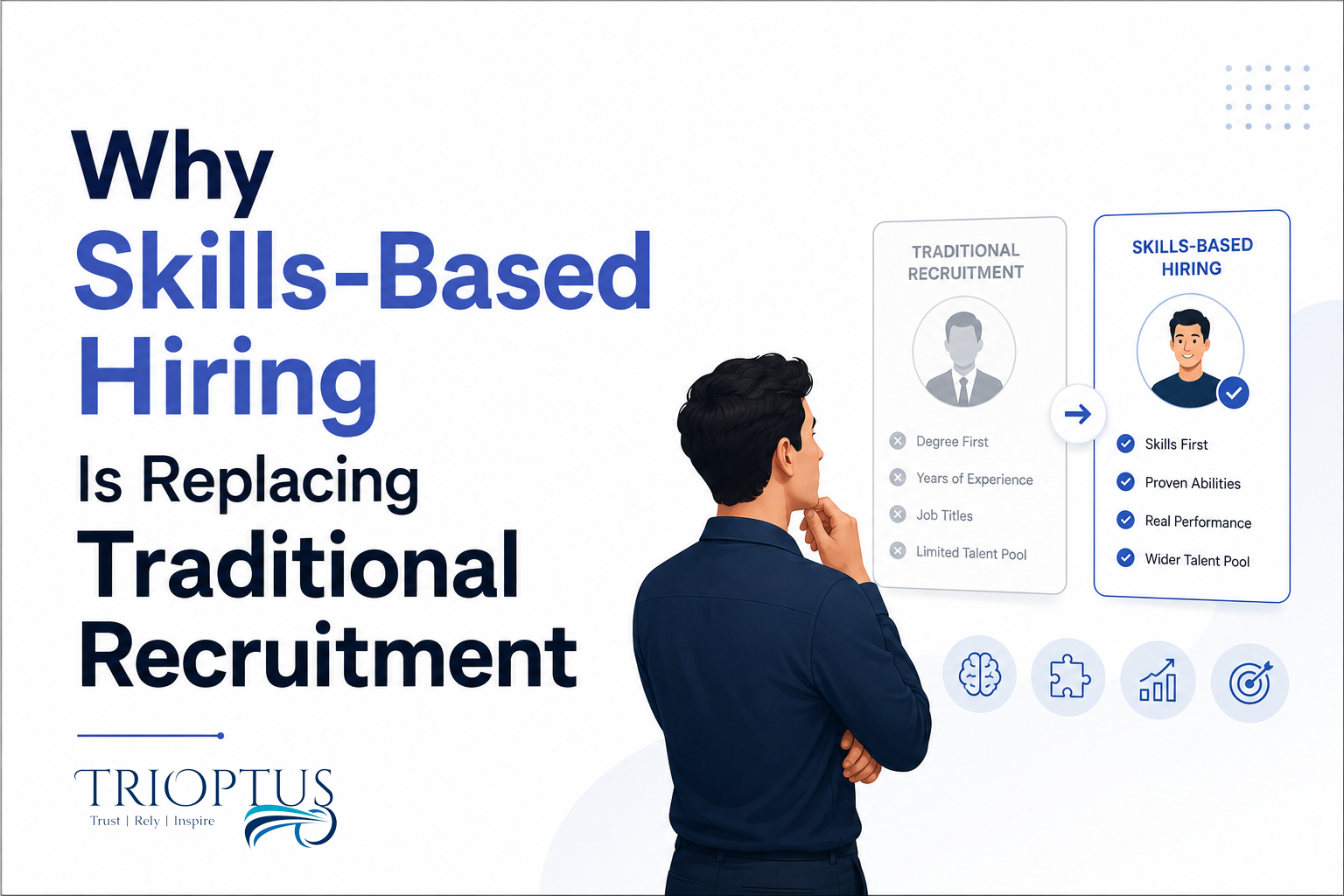
Skills-based hiring is a recruitment approach that prioritizes a candidate's abilities, competencies, certifications, and practical experience over traditional hiring requirements such as academic degrees or years of industry experience. Instead of asking where candidates studied or how long they have worked, employers focus on whether they possess the skills necessary to perform the role successfully.
In healthcare staffing, this means evaluating clinical expertise, technical proficiency, communication skills, patient care capabilities, adaptability, and compliance knowledge. The objective is to identify candidates who can deliver excellent patient care from day one, regardless of whether they followed a conventional career path.
Why Traditional Recruitment Is Changing
For decades, healthcare recruitment relied heavily on job descriptions requiring specific degrees, minimum years of experience, and rigid qualification criteria. While these standards helped maintain consistency, they often limited access to talented professionals who gained valuable skills through alternative pathways such as certifications, specialized training programs, military service, apprenticeships, or hands-on clinical experience.
Today's healthcare workforce demands greater flexibility. Hospitals and healthcare organizations cannot afford prolonged vacancies while searching for candidates who perfectly match outdated hiring criteria. Skills-based hiring allows recruiters to widen the talent pool without compromising quality or patient safety.
Why Skills-Based Hiring Matters in Healthcare Staffing
Healthcare organizations are under increasing pressure to deliver high-quality patient care while managing workforce shortages and rising operational costs. Every vacant clinical position place additional strain on existing staff, increases burnout, and can negatively affect patient outcomes.
Skills-based hiring enables staffing agencies and healthcare employers to identify qualified professionals more efficiently, reduce time-to-fill, improve workforce diversity, and ensure healthcare teams possess the practical capabilities required for modern clinical environments.
Key Reasons Skills-Based Hiring Is Replacing Traditional Recruitment
- Focus on Real-World Skills Instead of Credentials
- Faster Hiring for Critical Healthcare Roles
- Expands the Healthcare Talent Pool
- Improves Quality of Hire
- Reduces Hiring Bias
- Supports Workforce Diversity and Inclusion
- Better Adaptability to Emerging Healthcare Technologies
- Enhances Employee Retention
- Addresses Healthcare Workforce Shortages
- Aligns with Future Workforce Needs
Focus on Real-World Skills Instead of Credentials
Healthcare employers are increasingly recognizing that academic qualifications alone do not guarantee workplace success. Clinical competence, communication, critical thinking, empathy, and technical proficiency often have a greater impact on patient care than the name of a university or the number of years listed on a résumé.
Skills-based hiring evaluates candidates based on what they can actually do, helping organizations identify professionals who are fully capable of performing their responsibilities from the beginning.
Faster Hiring for Critical Healthcare Roles
Healthcare organizations frequently face urgent staffing needs, especially in emergency departments, intensive care units, behavioral health, long-term care, and allied health services. Traditional recruitment processes often delay hiring by eliminating candidates who do not meet every listed qualification.
By emphasizing practical competencies, recruiters can identify suitable candidates more quickly, significantly reducing time-to-fill and ensuring healthcare facilities maintain safe staffing levels.
Expands the Healthcare Talent Pool
One of the greatest advantages of skills-based hiring is access to a much larger candidate pool. Qualified professionals who have developed expertise through certifications, vocational education, clinical rotations, or specialized healthcare training become eligible for opportunities that may previously have been unavailable.
This broader approach helps staffing agencies find exceptional talent in an increasingly competitive labor market.
Improves Quality of Hire
When hiring decisions are based on demonstrated competencies rather than assumptions tied to education or tenure, employers often make more successful placements. Candidates selected for their practical abilities typically require less adjustment time and integrate more effectively into healthcare teams.
Higher-quality hires contribute to improved patient satisfaction, stronger team collaboration, and better clinical outcomes.
Reduces Hiring Bias
Traditional recruitment methods can unintentionally favor candidates from particular educational institutions or career backgrounds. Skills-based hiring introduces a more objective evaluation process by focusing on measurable competencies and job-related performance.
This approach encourages fairer hiring decisions while creating opportunities for talented professionals from diverse educational and professional backgrounds.
Supports Workforce Diversity and Inclusion
Healthcare organizations serve increasingly diverse patient populations. Building an equally diverse workforce improves communication, cultural understanding, and patient trust.
Skills-based hiring removes unnecessary barriers that may prevent qualified candidates from underrepresented communities from entering healthcare professions, helping organizations strengthen diversity and inclusion initiatives.
Better Adaptability to Emerging Healthcare Technologies
Healthcare continues to evolve through artificial intelligence, telehealth, electronic health records, automation, and digital diagnostics. Organizations need professionals who can quickly learn new technologies and adapt to changing clinical environments.
Skills-based hiring identifies candidates with strong problem-solving abilities, digital literacy, and continuous learning mindsets that support long-term organizational success.
Enhances Employee Retention
Employees who are hired because their skills align closely with job requirements are often more confident, engaged, and successful in their roles. Better job fit leads to increased satisfaction, stronger performance, and lower turnover rates.
For healthcare staffing organizations, improved retention reduces recruitment costs while creating greater workforce stability.
Addresses Healthcare Workforce Shortages
Healthcare staffing shortages remain one of the industry's biggest challenges. Restrictive hiring requirements often exclude qualified professionals who are ready to contribute immediately.
Skills-based hiring allows employers to fill vacancies more efficiently while maintaining high standards of patient care and regulatory compliance.
Aligns with Future Workforce Needs
Healthcare jobs continue to evolve as technology, regulations, and patient expectations change. Organizations that prioritize adaptability, continuous learning, and practical competencies are better prepared for future workforce demands.
Skills-based hiring creates agile healthcare teams capable of responding to industry changes without relying solely on traditional career pathways.
Benefits of Skills-Based Hiring for Healthcare Organizations
- Reduces time-to-hire
- Expands access to qualified healthcare professionals
- Improves quality of hire
- Enhances patient care outcomes
- Increases employee retention
- Supports workforce diversity and inclusion
- Reduces recruitment costs
- Improves workforce agility
- Strengthens employer branding
- Creates future-ready healthcare teams
By shifting recruitment toward demonstrated capabilities, healthcare organizations can build stronger teams while responding more effectively to staffing shortages and changing patient needs.
How Healthcare Staffing Agencies Can Implement Skills-Based Hiring
- Redesign job descriptions to focus on essential competencies
- Use structured skills assessments during recruitment
- Evaluate clinical simulations and practical demonstrations
- Verify certifications and technical competencies
- Incorporate behavioral and situational interviews
- Leverage AI-powered candidate matching tools
- Partner with certification programs and healthcare training institutions
- Invest in continuous upskilling and reskilling initiatives
- Measure hiring success using performance-based metrics
- Continuously update hiring criteria based on evolving workforce demands
Implementing these practices enables staffing agencies to identify high-performing candidates more accurately while delivering better value to healthcare employers.
Challenges of Skills-Based Hiring
Although skills-based hiring offers numerous advantages, successful implementation requires thoughtful planning and consistent evaluation.
- Developing standardized skills assessments
- Verifying practical competencies fairly
- Balancing certifications with real-world experience
- Training recruiters on competency-based interviewing
- Integrating new assessment technologies
- Ensuring compliance with healthcare regulations
- Maintaining consistent evaluation standards across multiple roles
Organizations that invest in robust assessment processes and recruiter training can overcome these challenges while maximizing the benefits of competency-focused recruitment.
The Future of Healthcare Recruitment
As healthcare continues to embrace digital transformation, artificial intelligence, predictive analytics, and workforce automation, skills-based hiring will become the standard approach for attracting and retaining talent. Recruiters will increasingly rely on competency frameworks, digital assessments, AI-powered matching platforms, and continuous learning pathways to build highly capable healthcare teams.
Rather than asking whether candidates possess traditional qualifications alone, healthcare employers will focus on whether they can deliver exceptional patient care, collaborate effectively, adapt to new technologies, and contribute to long-term organizational success.
Conclusion
Skills-based hiring is transforming healthcare recruitment by shifting the focus from credentials to demonstrated capabilities. In an environment defined by workforce shortages, rapid technological change, and increasing patient expectations, this approach enables healthcare organizations to identify qualified professionals more efficiently while improving hiring quality, workforce diversity, and employee retention.
For healthcare staffing agencies and employers, embracing skills-based hiring is no longer simply a recruitment trend—it is a strategic advantage. Organizations that prioritize competencies over conventional hiring criteria will be better positioned to build resilient, future-ready workforces capable of delivering exceptional patient care in an increasingly dynamic healthcare landscape.