Payroll and Accounting Trends Every Business Should Know in 2026
Published on Jun 30, 2026
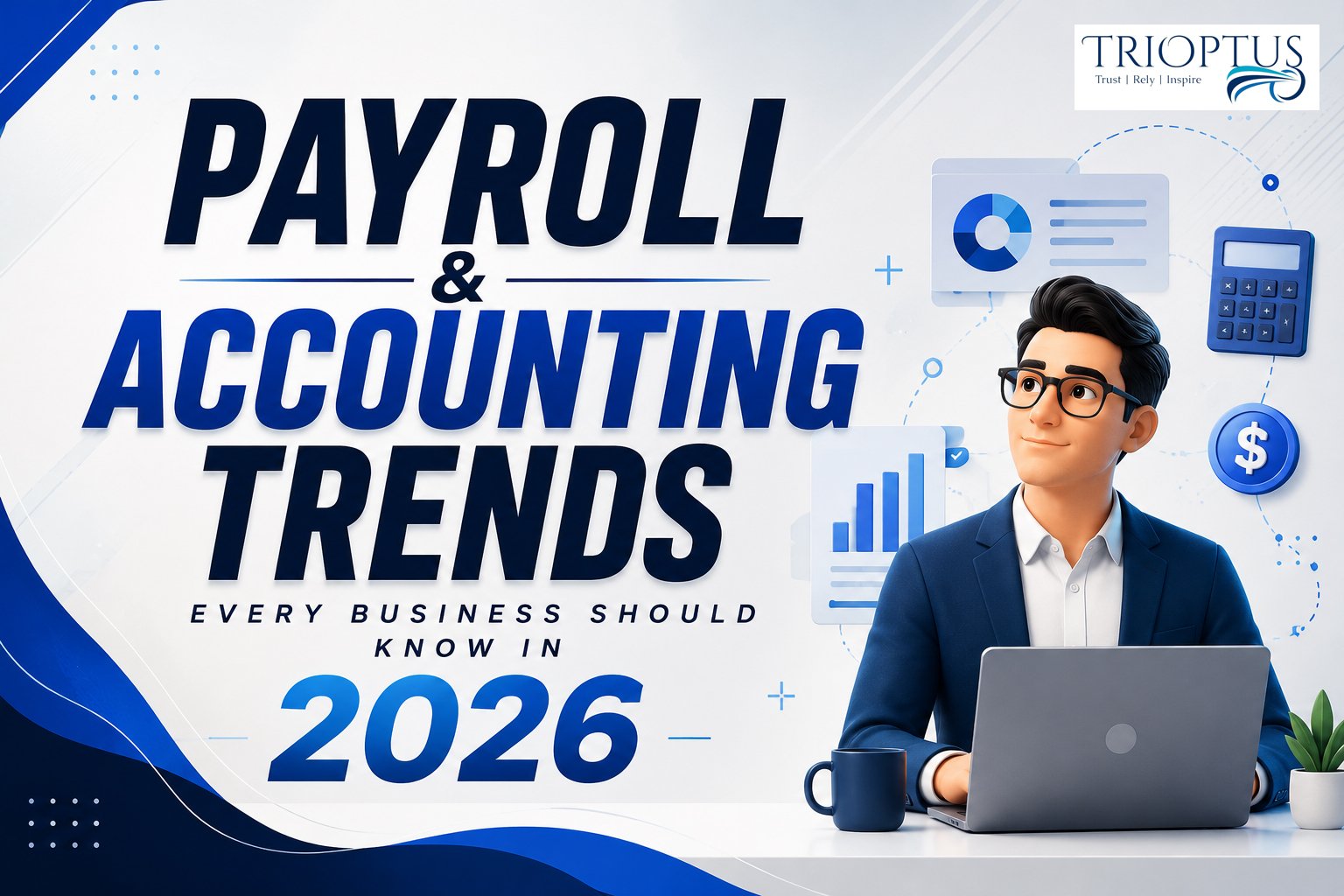
Stay ahead of changing financial practices with the payroll and accounting strategies every modern business needs to embrace in 2026.
The Rise of AI and Automation in Payroll Management
Artificial Intelligence (AI) and automation are reshaping the payroll landscape like never before. Traditionally, payroll processing involved numerous manual tasks, including calculating salaries, tracking attendance, managing tax deductions, and generating reports. These processes were time-consuming and prone to human errors.
In 2026, AI-powered payroll systems are handling these responsibilities with remarkable efficiency and accuracy. Automated systems can process employee salaries, calculate overtime, manage benefits, and ensure tax compliance in a matter of minutes. By eliminating repetitive administrative tasks, businesses can focus more on strategic activities such as employee engagement and workforce planning.
Furthermore, AI is helping organizations identify payroll anomalies, detect fraud, and provide predictive insights that improve financial planning. Automation is no longer a luxury for large corporations; it has become an essential investment for businesses of all sizes.
Cloud-Based Accounting Is Becoming the New Normal
The adoption of cloud technology continues to revolutionize the accounting industry. Businesses are increasingly moving away from traditional accounting software installed on local computers and shifting toward cloud-based solutions that provide flexibility and real-time access to financial information.
Cloud accounting platforms allow finance teams, business owners, and accountants to access data from anywhere in the world. This accessibility has become particularly important in today's remote and hybrid work environments. Financial reports can be generated instantly, transactions can be monitored in real time, and collaboration between teams has become more seamless than ever.
Beyond convenience, cloud-based accounting systems offer enhanced security, automatic backups, and easy scalability. As companies continue their digital transformation journeys, cloud accounting has become a cornerstone of modern financial management.
Payroll Compliance Is Becoming More Challenging
Regulatory compliance remains one of the biggest concerns for businesses in 2026. Governments around the world are frequently updating tax laws, labor regulations, and reporting requirements. Businesses operating across multiple states or countries face even greater complexity due to varying employment laws and taxation systems.
Failure to comply with these regulations can result in substantial financial penalties, legal complications, and reputational damage. As a result, organizations are investing heavily in compliance management systems and seeking expert guidance to navigate the changing regulatory landscape.
Modern payroll systems now include built-in compliance features that automatically update tax rules and generate reports according to the latest legal requirements. Companies are also conducting regular audits and strengthening internal controls to minimize compliance risks.
Outsourcing Payroll and Accounting Services Is Gaining Momentum
One of the most notable trends in 2026 is the growing preference for outsourcing payroll and accounting functions. Businesses are realizing that managing financial operations internally can be both costly and resource-intensive.
By outsourcing these functions to specialized service providers, organizations gain access to experienced professionals, advanced technologies, and industry best practices. This allows businesses to reduce operational expenses while improving accuracy and efficiency.
Outsourcing also enables management teams to focus on their core competencies rather than spending valuable time on administrative tasks. Whether it is payroll processing, bookkeeping, tax filing, or financial reporting, outsourcing has become a strategic solution for companies seeking operational excellence and scalability.
Data Analytics Is Transforming Financial Decision-Making
Accounting is no longer just about recording transactions and preparing financial statements. In 2026, businesses are leveraging financial data to make smarter and faster decisions.
Advanced analytics tools allow organizations to gain deeper insights into cash flow, profitability, operational costs, and future growth opportunities. Finance teams are increasingly using predictive analytics to forecast revenue trends, identify risks, and optimize budgeting strategies.
This shift from traditional bookkeeping to strategic financial analysis has elevated the role of accountants and finance professionals within organizations. Financial data is now considered one of the most valuable assets for driving business success.
Cybersecurity Has Become a Financial Priority
As payroll and accounting systems become more digital, cybersecurity concerns continue to grow. Financial systems contain highly sensitive information, including employee records, banking details, tax information, and confidential business data.
Cybercriminals are increasingly targeting organizations through phishing attacks, ransomware, and data breaches. Consequently, businesses are investing heavily in cybersecurity measures to protect their financial information.
Multi-factor authentication, data encryption, secure cloud storage, and employee cybersecurity training have become standard practices. Organizations understand that a single security breach can result in financial losses and damage customer trust, making cybersecurity an essential component of modern financial management.
The Demand for Real-Time Financial Reporting
The days of waiting until the end of the month to review financial performance are quickly disappearing. Business leaders today require immediate access to financial information in order to make informed decisions.
Real-time reporting allows organizations to monitor revenue, expenses, cash flow, and profitability instantly. This level of visibility helps management identify potential problems before they become serious and enables businesses to respond more effectively to market changes.
In an increasingly competitive business environment, access to real-time financial insights can provide a significant strategic advantage.
Integration of Payroll, HR, and Accounting Systems
Another important trend in 2026 is the integration of payroll, human resources, and accounting systems. Organizations are moving toward unified platforms that connect various business functions into a single ecosystem.
Integrated systems eliminate duplicate data entry, reduce errors, and improve operational efficiency. Employee information can flow seamlessly between departments, simplifying processes such as onboarding, attendance management, benefits administration, and payroll processing.
This integration not only enhances productivity but also improves the employee experience by providing faster and more accurate services.
Managing a Global Workforce Through Advanced Payroll Systems
The rise of remote work has enabled companies to hire talent from different parts of the world. As businesses expand internationally, managing payroll across multiple countries has become increasingly complex.
Organizations now require systems capable of handling different currencies, local tax laws, employment regulations, and reporting requirements. Global payroll management solutions are helping businesses overcome these challenges by centralizing payroll operations and ensuring compliance across various jurisdictions.
Companies that successfully manage global payroll can access a broader talent pool and strengthen their competitive position in the international market.
The Shift Toward Paperless and Sustainable Accounting
Sustainability is influencing every aspect of business operations, including payroll and accounting. Organizations are increasingly adopting paperless processes to reduce costs and minimize their environmental impact.
Digital invoices, electronic payslips, online approvals, and cloud-based document management systems are replacing traditional paper-based workflows. These changes not only support environmental sustainability but also improve efficiency, accessibility, and data security.
Paperless accounting is becoming an essential part of digital transformation initiatives and reflects a company's commitment to responsible business practices.
Conclusion
The payroll and accounting industry in 2026 is defined by innovation, automation, and strategic thinking. Businesses are moving beyond traditional financial processes and embracing technologies that improve efficiency, enhance compliance, and support data-driven decision-making.
From AI-powered payroll systems and cloud accounting solutions to cybersecurity investments and global payroll management, these trends are reshaping how organizations manage their financial operations. Companies that adapt to these changes will not only streamline their processes but also build a stronger foundation for long-term growth and success.
As the business environment continues to evolve, payroll and accounting will remain critical functions that drive organizational performance. Investing in modern financial solutions today is no longer just an option—it is a necessity for businesses that want to thrive in the future.