
How to Improve Candidate Experience During Recruitment
Published on Oct 06, 2026
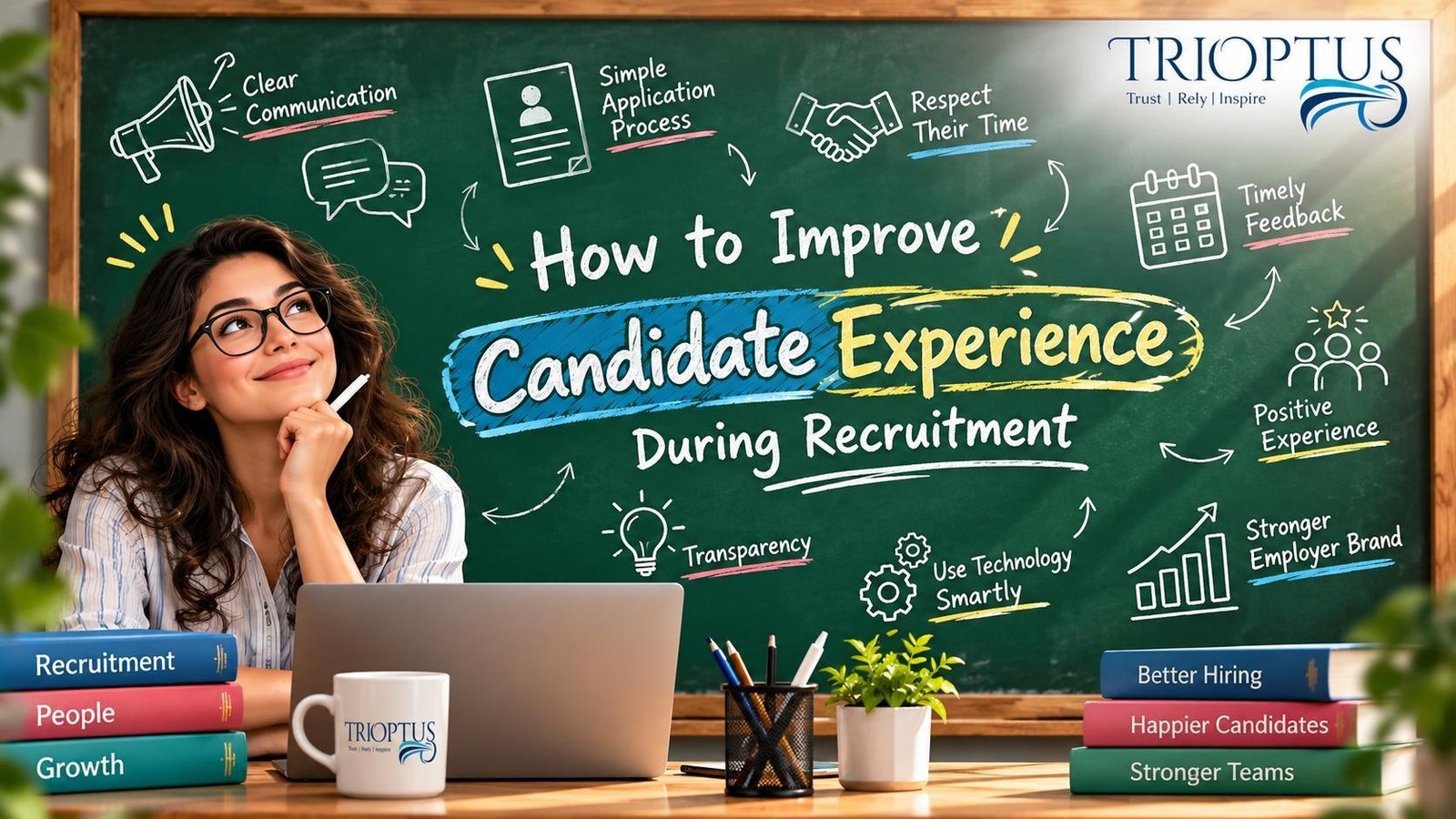
Building Trust, Communication & Engagement at Every Step
What Is Candidate Experience?
Candidate experience refers to how job seekers perceive and interact with an organization throughout the recruitment process.
It can include everything from:
- Finding and applying for a job
- Reading the job description
- Communicating with recruiters
- Scheduling interviews
- Completing assessments
- Interacting with hiring managers
- Receiving updates and feedback
- Getting an offer or rejection
- Completing the onboarding process
A candidate may not get the job, but they should still walk away feeling that the company treated them fairly, professionally, and respectfully.
Why Candidate Experience Matters
Candidates are evaluating companies just as much as companies are evaluating candidates.
A talented professional may decline an offer if the recruitment process feels disorganized or if communication is poor. Similarly, a positive experience can make candidates more interested in joining your organization—even before they receive an offer.
A strong candidate experience can help organizations:
Attract Better Talent
Highly qualified professionals often have multiple opportunities available. A clear, efficient, and professional hiring process can make your organization stand out.
Increase Offer Acceptance
Candidates who have a positive experience are more likely to feel confident about accepting an offer when one is presented.
Strengthen Employer Brand
Candidates share their experiences with colleagues, friends, and online communities. A poor recruitment experience can negatively affect your employer reputation, while a positive one can strengthen it.
Reduce Candidate Drop-Off
Long application forms, unclear instructions, and slow communication can cause candidates to abandon the process. Improving the experience can help keep qualified applicants engaged.
Build Long-Term Relationships
Not every qualified candidate will be the right fit for a particular role. Maintaining a positive relationship can allow companies to consider those candidates for future opportunities.
10 Ways to Improve Candidate Experience During Recruitment
1. Write Clear and Accurate Job Descriptions
The candidate experience begins before a candidate ever speaks with a recruiter.
A confusing or unrealistic job description can discourage qualified applicants or attract candidates who are not suitable for the role.
A strong job description should clearly explain:
- Job title
- Key responsibilities
- Required qualifications
- Preferred qualifications
- Work location
- Work arrangement, such as remote, hybrid, or onsite
- Expected working hours or shift requirements when relevant
- Compensation information where appropriate
- Benefits
- Career growth opportunities
- Application requirements
Avoid filling job descriptions with unnecessary jargon or unrealistic requirements.
Candidates should be able to quickly understand what the position involves and whether it matches their skills and career goals.
2. Make the Application Process Simple
One of the easiest ways to improve candidate experience is to remove unnecessary friction from the application process.
If candidates have to complete multiple forms, repeatedly enter information already included on their resume, or create complicated accounts just to apply, they may abandon the process.
Companies should aim for an application process that is:
- Easy to understand
- Mobile-friendly
- Reasonably short
- Accessible
- Clear about required information
- Transparent about the next steps
The goal is not to collect as much information as possible at the application stage. The goal is to identify qualified candidates efficiently while respecting their time.
3. Communicate Early and Consistently
One of the most common frustrations candidates experience is silence after applying or interviewing.
Even when there is no major update, a short message can help candidates understand that the process is still moving forward.
For example:
“Thank you for your patience. We are still completing interviews and expect to provide an update by next Friday.”
This simple communication can make a significant difference.
Recruiters should establish clear communication expectations and provide updates when timelines change.
4. Set Clear Expectations About the Hiring Process
Candidates should know what to expect.
Before an interview, consider explaining:
- Who they will meet
- How long the interview will take
- Whether it will be virtual or in person
- What topics will be discussed
- Whether they need to prepare anything
- Whether there will be additional interview rounds
- What the next steps are
For example, instead of simply sending a calendar invitation, a recruiter could explain:
“Your first interview will be a 30-minute video conversation with the hiring manager. We will discuss your experience, the position, and your approach to several role-related situations.”
Providing context reduces uncertainty and helps candidates prepare effectively.
5. Respect Candidates’ Time
Candidates have jobs, families, personal responsibilities, and other commitments.
Recruitment teams should avoid unnecessary delays and excessive interview rounds whenever possible.
If a position requires several interviews, companies should consider coordinating schedules efficiently rather than repeatedly asking candidates to rearrange their calendars.
A well-structured hiring process demonstrates that the organization values candidates' time.
6. Create a Professional Interview Experience
Interviews are often one of the most important moments in the candidate journey.
Interviewers should arrive prepared, review the candidate's resume beforehand, and understand the role they are hiring for.
Avoid asking candidates to repeatedly explain information that is already clearly available in their application.
Interviewers should also provide candidates with an opportunity to ask questions.
Remember: the interview is not only an evaluation of the candidate. It is also an opportunity for the candidate to evaluate the organization.
7. Be Transparent About Compensation and Benefits
Compensation is an important part of a candidate's decision-making process.
Whenever possible and appropriate, companies should provide clear information about:
- Salary or pay range
- Bonuses or incentives
- Health benefits
- Retirement benefits
- Paid time off
- Work arrangement
- Other relevant benefits
Being transparent early in the process can help prevent misunderstandings later and ensure that both the employer and candidate have aligned expectations.
For U.S. employers, compensation transparency should also be considered alongside applicable state and local pay-transparency requirements.
8. Provide Timely Feedback
Candidates invest significant time preparing applications, attending interviews, and completing assessments.
Leaving them waiting indefinitely can damage their perception of the company.
Even when the answer is “no,” timely and respectful communication is better than leaving a candidate without an answer.
When appropriate, recruiters can provide useful high-level feedback without making promises or creating unnecessary legal or compliance risks.
For example:
“We decided to move forward with another candidate whose experience more closely matched the current requirements of the position.”
Clear communication allows candidates to move forward rather than waiting indefinitely.
9. Use Technology Without Losing the Human Touch
Recruitment technology can improve efficiency, but automation should not completely replace human communication.
Applicant tracking systems, automated scheduling, AI-powered screening, and recruitment platforms can help hiring teams manage large candidate volumes.
However, candidates still want to feel that there is a real person behind the process.
Companies can use automation for routine updates while keeping important conversations—such as interviews, final decisions, and offer discussions—personal and professional.
The best recruitment technology should make the process easier for both candidates and recruiters.
10. Ask Candidates for Feedback
Companies cannot improve candidate experience if they do not understand what candidates are experiencing.
After the recruitment process, organizations can collect feedback through a short survey.
Questions might include:
- Was the application process easy to understand?
- Were expectations clearly communicated?
- Did you receive timely updates?
- How would you rate your interview experience?
- Did the recruiter answer your questions effectively?
- What could we improve?
Organizations can then use this feedback to identify recurring problems and improve their recruitment process.
Common Candidate Experience Mistakes to Avoid
Even companies with strong recruitment strategies can make mistakes that negatively affect candidates.
Some common issues include:
Ghosting Candidates
Failing to provide updates after an interview can leave candidates frustrated and damage the company's reputation.
Overly Long Hiring Processes
Too many interview rounds can cause qualified candidates to lose interest or accept another offer.
Unclear Job Expectations
Candidates should understand the responsibilities, qualifications, schedule, location, and expectations before investing significant time in the process.
Poor Interview Preparation
Interviewers who arrive late, have not reviewed the candidate's information, or cannot explain the role create a negative impression.
Inconsistent Communication
Different recruiters or interviewers providing conflicting information can create confusion and reduce trust.
Making the Process Too Impersonal
Automation can improve efficiency, but candidates should not feel like they are interacting only with machines.
How to Measure Candidate Experience
Improving candidate experience requires more than making changes and assuming they work.
Recruitment teams should track relevant metrics to understand what is happening throughout the hiring process.
Some useful measurements include:
Candidate satisfaction score: Measures how candidates rate their overall recruitment experience.
Application completion rate: Shows how many candidates begin an application compared with how many complete it.
Candidate drop-off rate: Identifies where candidates are leaving the recruitment process.
Time-to-hire: Measures how long it takes to move from candidate identification to hire.