How to Attract Top Talent in a Competitive Job Market
Published on Sep 01, 2026
Strategies to Recruit and Retain the Best Candidates
Understand What Top Candidates Are Looking For:-
Before developing a recruitment strategy, employers need to understand what motivates today's candidates. While compensation remains an important factor, many professionals consider the complete employment package when deciding whether to pursue or accept an opportunity.
Candidates increasingly want to know how a company will support their career, whether leadership is trustworthy, how flexible the workplace is, and whether the organization offers meaningful opportunities to learn and advance.
For employers, understanding these expectations makes it easier to create job opportunities that are genuinely attractive rather than relying on generic job descriptions and standard benefits.
What Candidates Often Value
- Competitive compensation and benefits
- Career growth opportunities
- Flexible work arrangements
- Positive workplace culture
- Strong and supportive leadership
- Professional development
- Meaningful work
- Job stability and transparency
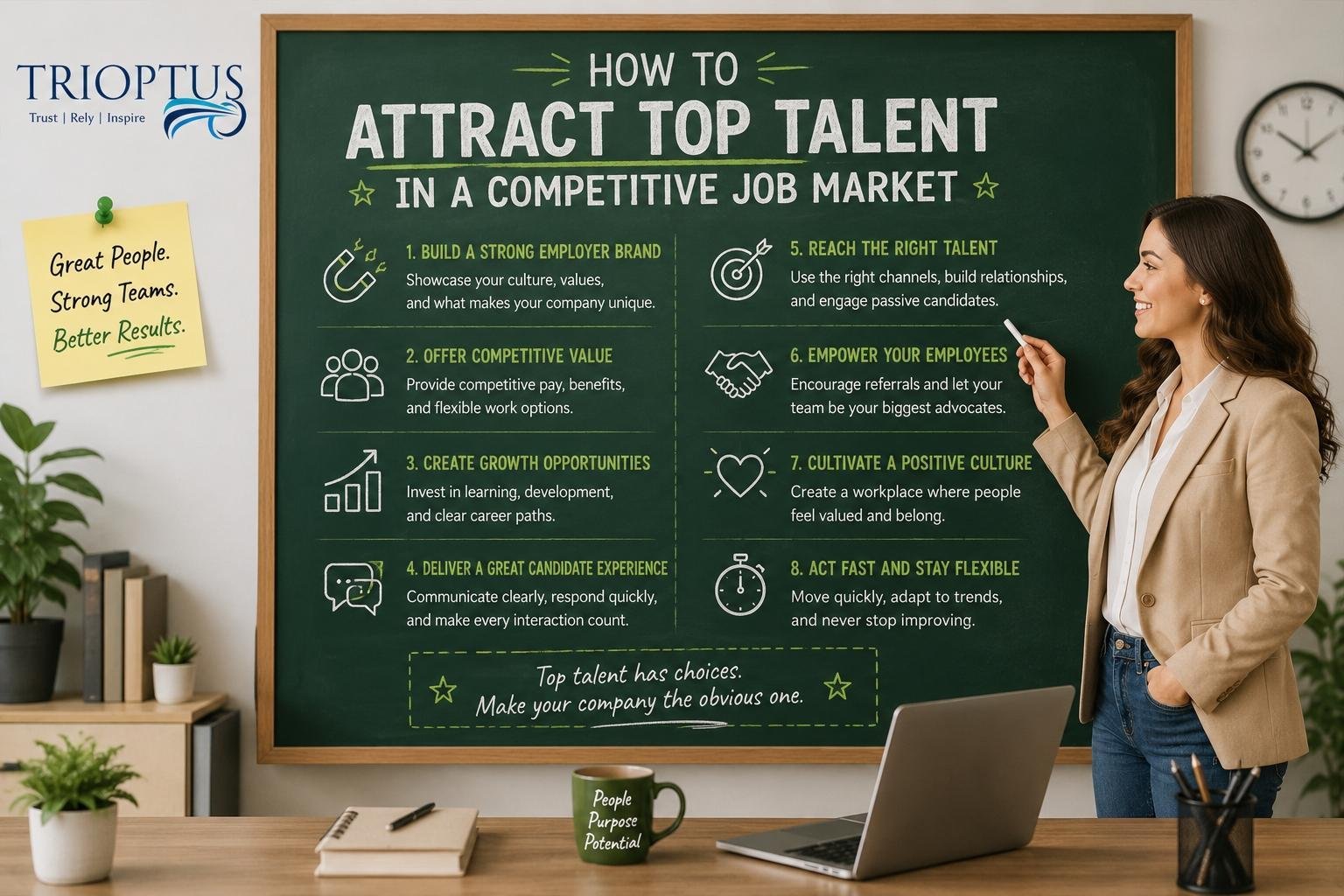
- Build an Employer Brand People Want to Join
Understand What Top Candidates Are Looking For
Before developing a recruitment strategy, employers need to understand what motivates today's candidates. While compensation remains an important factor, many professionals consider the complete employment package when deciding whether to pursue or accept an opportunity.
Candidates increasingly want to know how a company will support their career, whether leadership is trustworthy, how flexible the workplace is, and whether the organization offers meaningful opportunities to learn and advance.
For employers, understanding these expectations makes it easier to create job opportunities that are genuinely attractive rather than relying on generic job descriptions and standard benefits.
Build an Employer Brand People Want to Join
Your employer brand is often the first impression candidates have of your company. Before applying, candidates may visit your website, review your social media presence, search for employee reviews, and research your reputation.
A strong employer brand gives candidates a clear picture of what it is like to work for your organization. Instead of simply saying that your company has a "great culture," demonstrate it through employee stories, career opportunities, company achievements, community involvement, and authentic workplace content.
Your employer brand should also match the actual employee experience. Overpromising during recruitment and delivering something completely different after hiring can quickly damage trust and increase turnover.
Strong Employer Branding Includes
- Authentic employee stories
- Clear company values
- Transparent career opportunities
- Employee-focused content
- Consistent messaging across recruitment channels
Write Job Descriptions That Actually Attract Candidates
A job description is more than a list of responsibilities. It is a marketing tool for the role and an opportunity to explain why someone should want to join your organization.
Many job descriptions focus heavily on requirements while providing very little information about what the employee will gain. Long lists of qualifications can discourage qualified candidates, particularly when some requirements are not truly essential.
Effective job descriptions should clearly explain the role, expectations, compensation when appropriate, benefits, growth opportunities, workplace flexibility, and what makes the position valuable.
Improve Your Job Descriptions
- Use clear and straightforward language.
- Separate required qualifications from preferred ones.
- Explain career growth opportunities.
- Highlight meaningful benefits.
- Clearly describe responsibilities and expectations.
- Avoid unnecessary qualifications.
- Make Compensation Competitive
Salary remains one of the most important considerations for job seekers. Employers competing for highly skilled professionals need to understand current market compensation and ensure their offers remain competitive.
However, compensation is not only about base salary. Benefits, bonuses, retirement contributions, paid time off, healthcare coverage, professional development, flexible work arrangements, and other incentives can significantly influence a candidate's decision.
Companies should regularly review compensation against market conditions rather than relying on outdated salary structures.
Consider the Complete Compensation Package
- Base salary
- Performance bonuses
- Health and retirement benefits
- Paid time off
- Flexible work options
- Professional development
- Additional employee incentives
Create a Fast and Candidate-Friendly Hiring Process
- Top candidates do not stay available indefinitely. A lengthy recruitment process can cause employers to lose strong applicants to organizations that move faster.
- Candidates can become frustrated when they submit an application and hear nothing for weeks, complete multiple interviews without clear communication, or wait too long for a hiring decision.
- A streamlined hiring process demonstrates that an organization respects candidates' time and is serious about hiring.
- Improve Hiring Speed By Responding quickly to qualified applicants.
- Reducing unnecessary interview stages.
- Using digital scheduling tools.
- Communicating timelines clearly.
- Providing regular updates.
- Making decisions promptly.
- Offer Flexibility Where Possible
Workplace flexibility has become an important part of the employment decision for many U.S. professionals. Depending on the position, employees may value remote work, hybrid arrangements, flexible schedules, compressed workweeks, or greater control over their working hours.
Not every position can offer remote work, and employers should not promise flexibility that the role cannot realistically support. However, organizations can explore where flexibility is practical and communicate those options clearly.
Flexibility can help companies compete for talent beyond their immediate geographic area and appeal to professionals who prioritize work-life balance.
Create Clear Career Growth Opportunities
Top performers often want to know what comes next. If employees cannot see a future within an organization, they may eventually look elsewhere for advancement.
Employers can make their opportunities more attractive by providing clear career paths, mentorship, training, leadership development, and internal mobility.
Candidates should be able to understand not only what the position offers today but also how the company can help them develop professionally over time.
- Career Growth Strategies
- Internal promotion opportunities
- Mentorship programs
- Professional training
- Leadership development
- Certification and education support
- Individual career development plans
Use Technology Without Losing the Human Connection
Recruitment technology can make hiring faster and more efficient. Applicant tracking systems, automated scheduling, candidate databases, AI-assisted sourcing, and digital assessments can reduce administrative work and help recruiters manage large talent pools.
However, technology should support the recruitment process rather than make it feel impersonal. Candidates still want meaningful conversations with recruiters and hiring managers.
The best recruitment strategies combine technology with human interaction. Automation can handle repetitive tasks while recruiters focus on understanding candidates, answering questions, and building relationships.
Reach Passive Candidates
Some of the strongest candidates may not be actively searching for a new job. They may already be employed and simply open to hearing about the right opportunity.
Reaching these passive candidates requires a different approach from traditional job advertising. Recruiters should build relationships through professional networks, industry communities, referrals, social platforms, and personalized outreach.
Instead of immediately asking someone to apply, recruiters can start a conversation about their experience, career goals, and potential opportunities.
Passive Talent Strategies
- Build professional networks.
- Use personalized outreach.
- Maintain long-term candidate relationships.
- Encourage employee referrals.
- Stay connected with previous applicants.
- Turn Employees Into Talent Ambassadors
Your existing employees can be one of your most powerful recruitment resources. People naturally trust real employee experiences more than polished corporate advertising.
Encouraging employees to share their experiences, participate in referral programs, attend career events, or contribute to company content can help potential candidates understand the organization from an employee perspective.
A strong employee referral program can also help organizations reach qualified candidates who may not discover the company through traditional job boards.
Improve the Candidate Experience
Candidate experience can influence whether a person accepts an offer, recommends your company, or considers applying again in the future.
Even candidates who are not selected should receive professional and respectful treatment. Clear communication, timely updates, transparent expectations, and constructive interactions can strengthen your employer reputation.
A positive candidate experience can also become a competitive advantage because candidates often share their experiences with colleagues and professional networks.
Candidate Experience Priorities
- Simple application process
- Clear communication
- Respectful interviews
- Timely feedback
- Transparent expectations
- Professional follow-up
Focus on Retention From Day One
Attracting talent is only half of the challenge. If new employees leave shortly after joining, organizations must continually replace them, increasing recruitment costs and putting additional pressure on hiring teams.
Retention should therefore begin during recruitment. Employers should provide realistic information about the position and workplace rather than presenting an overly polished picture.
Once employees join, strong onboarding, supportive management, recognition, career development, and regular communication can help turn new hires into long-term team members.
Measure What Is Working
- Recruitment strategies should be evaluated using measurable results. Tracking hiring data helps employers understand which channels attract qualified candidates and where candidates are dropping out of the process.
- Organizations can use this information to improve their recruitment strategy, reduce unnecessary spending, and create a more efficient hiring process.
Important Recruitment Metrics
- Time-to-hire
- Cost-per-hire
- Offer acceptance rate
- Quality of hire
- Candidate conversion rate
- Employee retention
- Source of hire
- Candidate satisfaction
Conclusion
Attracting top talent in a competitive U.S. job market requires more than advertising open positions. Employers need to understand what candidates value and create an experience that reflects those expectations.
Competitive compensation, a strong employer brand, flexible work options, career development, faster hiring, personalized communication, and a positive candidate
Ultimately, the strongest recruitment strategy is one that treats candidates as people rather than applications. Companies that build genuine relationships, communicate transparently, and create workplaces where employees can grow will be better positioned to attract exceptional talent—and keep it for the long term.