How Data-Driven Hiring Improves Recruitment Outcomes
Published on Aug 03, 2026
How Recruitment Data Leads to Better Talent Acquisition
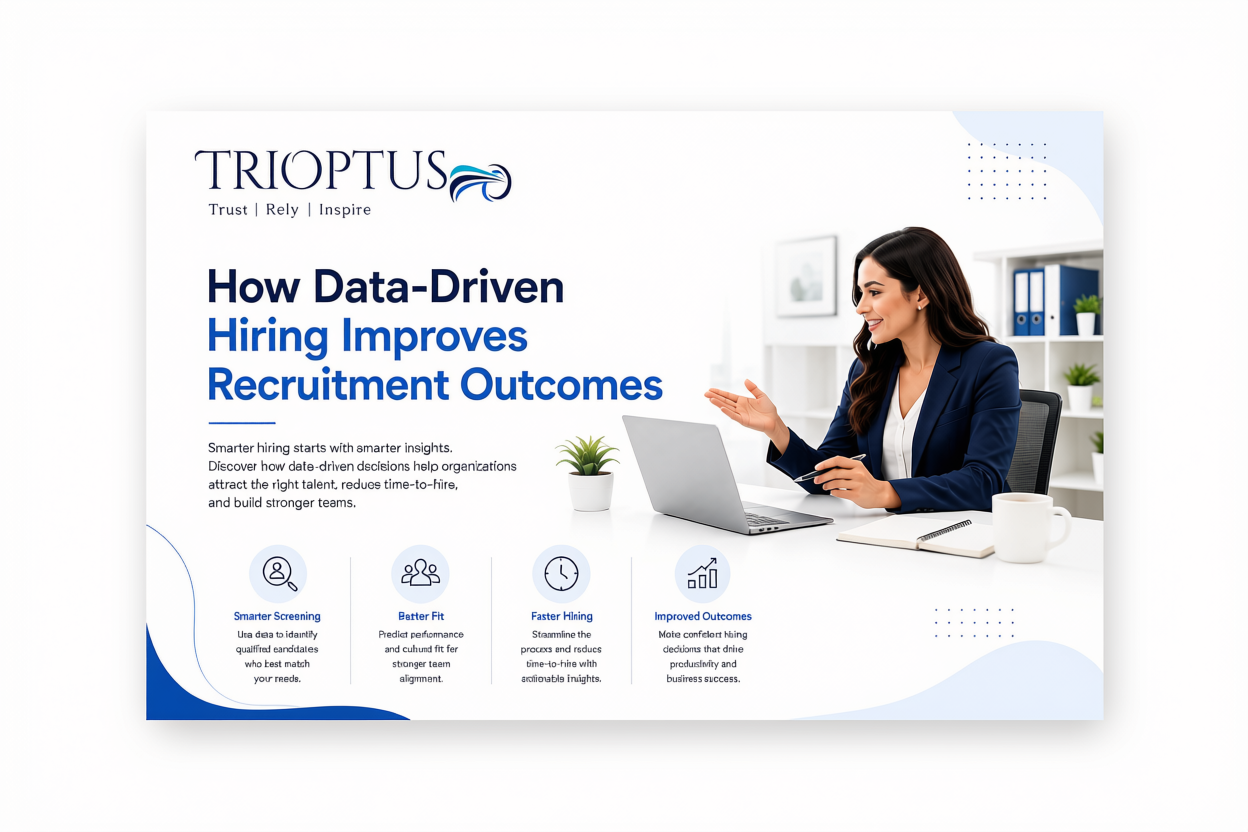
Recruitment speed has also become a major competitive advantage. Lengthy hiring processes often result in losing top candidates to competing employers. Recruitment analytics help hiring teams identify bottlenecks by tracking key metrics such as application completion rates, interview scheduling times, offer acceptance rates, and overall time-to-fill. These insights allow recruiters to streamline workflows, improve communication, and reduce delays while maintaining hiring quality.
Data-driven hiring also enables organizations to maximize the effectiveness of their recruitment marketing efforts. Every hiring source performs differently, and understanding which channels consistently deliver high-quality candidates helps organizations invest their recruitment budgets wisely. Recruitment analytics can compare the effectiveness of employee referrals, job boards, company career pages, professional networking platforms, recruitment agencies, campus recruiting programs, and social media campaigns. By focusing on the most successful channels, businesses can attract stronger candidates while reducing recruitment costs.
Workforce planning becomes more strategic when supported by data. Instead of reacting to hiring needs after they arise, organizations can use historical hiring trends, employee turnover patterns, business growth forecasts, retirement projections, and seasonal demand to anticipate future workforce requirements. This proactive approach allows recruitment teams to build talent pipelines in advance, reduce hiring delays, and ensure the organization has access to qualified candidates when new opportunities arise.
Candidate experience is another area where data-driven hiring creates meaningful improvements. Today's candidates expect a recruitment process that is simple, transparent, and responsive. Recruitment data helps organizations understand where applicants abandon the hiring process, experience delays, or encounter unnecessary complexity. By simplifying applications, improving recruiter communication, and providing timely updates throughout the hiring journey, organizations can strengthen their employer brand and increase offer acceptance rates.
Data-driven recruitment also supports diversity, equity, and inclusion (DEI) initiatives by encouraging more objective hiring practices. Structured interviews, skills-based assessments, standardized evaluation criteria, and recruitment analytics help reduce unconscious bias throughout the hiring process. Organizations can use recruitment data to monitor hiring trends, identify opportunities for improvement, and create a more inclusive workplace that values diverse perspectives and experiences.
Technology continues to transform the recruitment landscape. Artificial intelligence (AI), Applicant Tracking Systems (ATS), and recruitment automation platforms help recruiters screen resumes, identify qualified candidates, match applicants to suitable positions, and automate repetitive administrative tasks. These technologies improve efficiency while allowing recruiters to spend more time building relationships with candidates and hiring managers. Although AI enhances the hiring process, human judgment remains essential when evaluating communication skills, cultural fit, leadership potential, and long-term career alignment.
Measuring recruitment performance is essential for continuous improvement. Organizations should regularly monitor key recruitment metrics such as time-to-fill, cost-per-hire, quality-of-hire, first-year retention, offer acceptance rate, source-of-hire effectiveness, recruiter productivity, and hiring manager satisfaction. These key performance indicators (KPIs) provide valuable insights that help organizations refine recruitment strategies, improve operational efficiency, and maximize the return on investment (ROI) of their hiring efforts.
As organizations increasingly rely on digital recruitment technologies, protecting candidate information has become more important than ever. Recruitment teams should maintain secure systems for collecting, storing, and processing applicant data while complying with applicable privacy regulations. Transparent communication about how candidate information is used helps build trust and reinforces an organization's commitment to ethical recruitment practices.
The future of recruitment will continue to be shaped by data, technology, and strategic workforce planning. Organizations that embrace data-driven hiring gain a competitive advantage by making better hiring decisions, reducing recruitment costs, improving employee retention, and building stronger, high-performing teams. By combining recruitment expertise with analytics and modern technology, businesses can create hiring strategies that support sustainable growth and long-term success.
Key Takeaways
- Data-driven hiring enables organizations to make faster, smarter, and more objective hiring decisions.
- Recruitment analytics improve hiring quality while reducing time-to-fill and recruitment costs.
- Predictive workforce planning helps businesses prepare for future hiring needs before talent shortages occur.
- Measuring recruitment KPIs supports continuous improvement and better hiring outcomes.
- AI-powered recruiting tools improve efficiency while allowing recruiters to focus on candidate relationships.
- A positive candidate experience strengthens employer branding and increases offer acceptance rates.
- Secure data management and ethical recruitment practices build trust and support long-term success.
Conclusion
As the workforce continues to evolve, organizations must adopt smarter recruitment strategies to stay competitive. Data-driven hiring empowers businesses to make informed decisions, improve operational efficiency, and attract top talent in an increasingly competitive job market. By leveraging recruitment analytics, predictive workforce planning, AI-powered technology, and continuous performance measurement, organizations can build stronger teams, improve employee retention, and create a workforce that drives long-term business success.